Writing at the speed of thought
WRITING AT THE
SPEED OF THOUGHT
When people ask me what I do for a living, I usually say 'writer'.
I spend basically all my time either:
- writing these videos,
- writing code,
- writing my fiction podcasts, or
- writing music.
Over the years of tweaking my writing environment, I have noticed a subtle change: Every improvement to my writing systems improves my ability to think and reason about my work and my life.
Looking into the psychology, it's actually quite simple:
Increasing the bandwidth between our mind in our brain and our mind on the page simply allows us to think faster and better, according to the extended mind thesis.
And it turns out that in a very real way: writing is thinking.
Public Domain Videos

www.namtao.orggithub.com/NamtaoProductions/namtao.org

I dedicate my video scripts to the public domain.
Everything you see here: script, links, and images are part of a Markdown document available freely at my website and on GitHub at the above address.
PART 1
WRITING == THINKING
William Zinsser, "Writing To Learn"
THE SPEAKWRITE
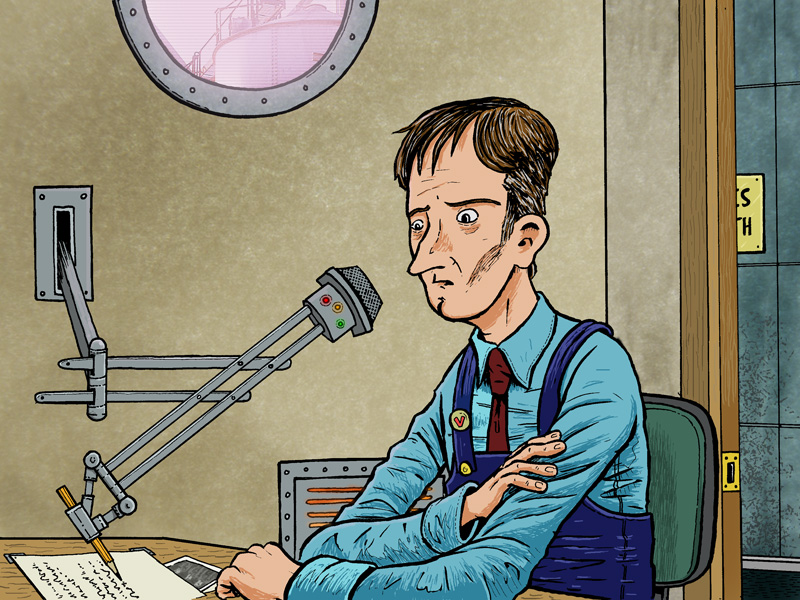
Image credit: Matt Wiegle, partykausa.com
To illustrate my core realisation, let us consider The Speakwrite.
This is a device created in the book 1984, by George Orwell.
It's a sort of Dictaphone that immediately prints your words on to the page, predating by 50 years the actual tech that became widely accessible in the 90s.
In Winston Smith's world of Big Brother, literacy was going extinct, and most people only wrote for themselves using the Speakwrite, if at all.
Though this narrative in the book principally laments the loss of literacy, a more subtle effect was that reliance on the Speakwrite caused the population to lose their ability to think and reason on paper.
#set page(width: 800pt)
#set par(justify: true)
#set text(
  font: "New Computer Modern",
  size: 20pt,
  style: "italic",
  fill: white
)
#text()[
April 4th. Last night to the flicks. All war films. One
very good one of a ship full of refugees being bombed
somewhere in the Mediterranean. Audience much amused
by shots of a great huge fat man trying to swim away with
a helicopter after him, first you saw him wallowing along
in the water like a porpoise, then you saw him through the
helicopters gunsights, then he was full of holes and the sea round him turned pink and he sank as suddenly as though
the holes had let in the water, audience shouting with laughter when he sank. then you saw a lifeboat full of children with a helicopter hovering over it. there was a middle-aged woman
might have been a jewess sitting up in the bow with a little
boy about three years old in her arms. little boy screaming with fright and hiding his head between her breasts as if he was trying to burrow right into her and the woman putting her arms round him and comforting him although she was
blue with fright herself, all the time covering him up as much
as possible as if she thought her arms could keep the bullets
off him. then the helicopter planted a 20 kilo bomb in among
them terrific flash and the boat went all to matchwood. then
there was a wonderful shot of a child’s arm going up up up
right up into the air a helicopter with a camera in its nose
must have followed it up and there was a lot of applause from
the party seats but a woman down in the prole part of the
house suddenly started kicking up a fuss and shouting they
didnt oughter of showed it not in front of kids they didnt it
aint right not in front of kids it aint until the police turned
her turned her out i dont suppose anything happened to her
nobody cares what the proles say typical prole reaction they
never—
]
In the book, when Winston tried to write his thoughts, they came out in this muddled, unfiltered rush.
To my mind, this is little different than if he had spoken them. No editing, no reflection, no improvement.
Cathartic? Very. Thoughtful? Less so.
Winston could still write using the Speakwrite, but he couldn't edit. And because he couldn't edit what he wrote, to marshal his thoughts on the page, he was less able to organise, plan, or, simply think, clearly.
To me, the Speakwrite isn't dystopian because it made the people forgot how to write, it's dystopian because it made the people forgot how to think.
WRITING EXTENDS
YOUR MIND OUTSIDE
OF YOUR BRAIN
William Zinsser, "Writing To Learn"
Now, it is certainly possible to think without the framework of language, or to edit your named thoughts verbally. Indeed, a vital part of these videos is speaking my written script into an empty room, hearing my words bounce off the walls and into my ears to check how they sound.
But for me, this is more for performance than pondering.
Martin Luther King Jr
It is not a contentious take to say that writing propelled our advancement as a species!
Throughout history, a common trait that unifies:
- lords,
- church leaders,
- kings, and,
- enslavers,
(but I repeat myself)
Is that they all were afraid of ay literate population.
Because ay literate population might begin to THINK.
(I'm of course, not talking about your church leaders, they're nice people, I'm talking about all the other thousands of religions that you and I agree are led by misguided charlatans. We're more alike than you might think: Our opinions only differ by 1.)
PART 2
WRITING == EDITING
Richard Feynman, quoted in the book 'Smarter Than You Think'
If you pay attention to someone who is writing, wherever they are, from Starbucks to the library, you will find that most of the time they are not actually typing.
Mostly when we are 'writing', we're not using the keyboard, we're clicking around our text moving words, cutting and pasting here and there, or deleting whole paragraphs.
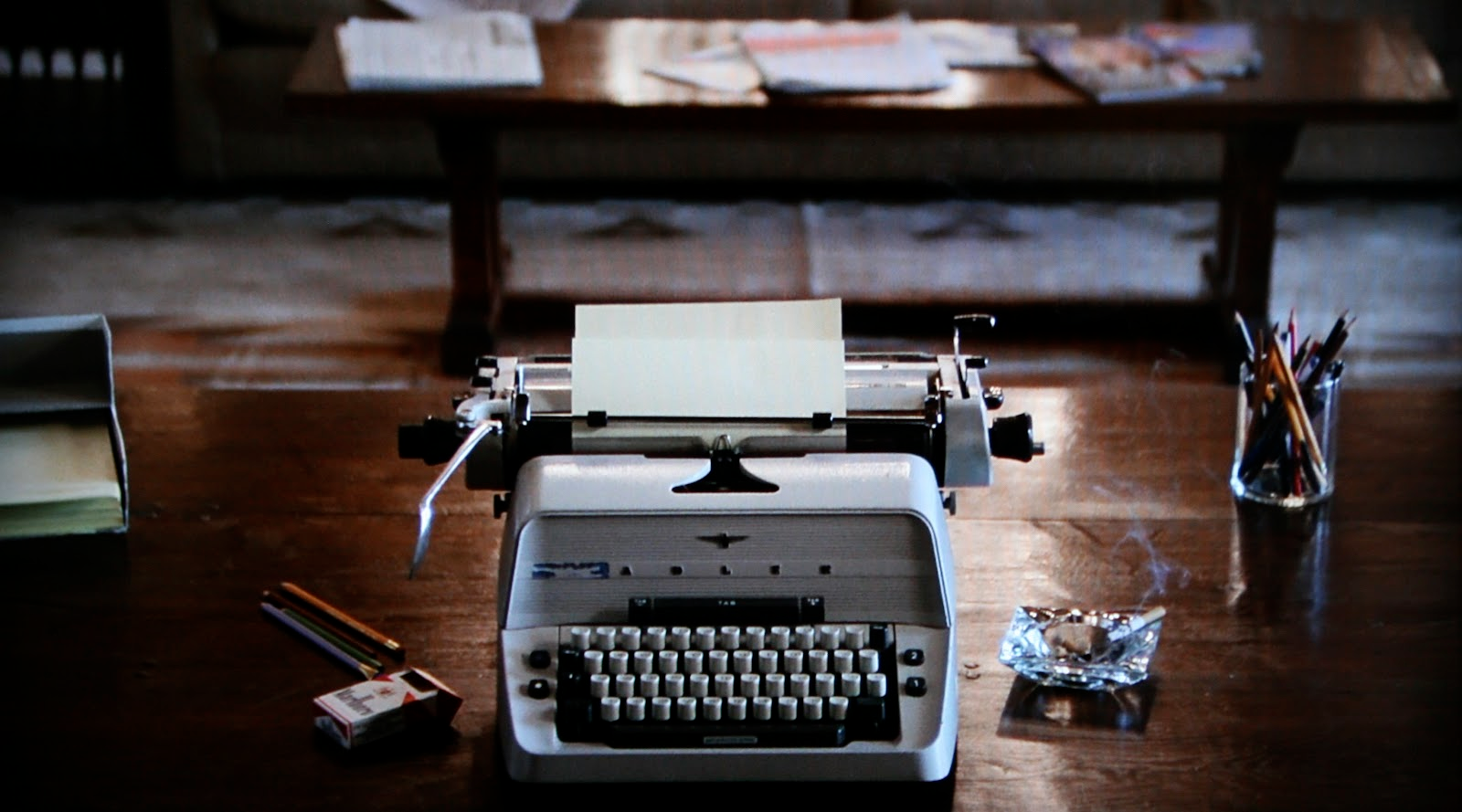
Country to the common myth, the problem with our computers being lumbered with the legacy of the typewriter is not that the QWERTY layout was designed to slow us down.
I find this unlikely for two main reasons:
- You can type 'typewriter' using only the top letter row
- The home row is in almost perfect alphabetical order
CLEARLY this doesn't make for a marvellous ergonomic layout, but also it strikes me that it wasn't designed by ANYONE for ANYTHING.
Stuff just HAPPENS, you know? And after you've shipped a few thousand units and the copycats are making their own versions, before you know it, you've accidentally created a 'standard' without intending to.
It's not designed to slow you down, but, more importantly, it's also not designed for editing, how could it be? You can't edit on a typewriter (white-out doesn't count).
WORD PROCESSORS
ARE FOR EDITING
NOT WRITING
(the clue is in the name)
Editing text is the killer app that our modern computing is built on.
Word processors are for processing words, not simply typing them, that's why they're so much better for writing than the typewriter.
With computers, we've got this superpower where words and letters can be re-arranged without using white-out or re-printing the page! Marvellous!
Editing Hotkeys
| KEY | ACTION |
|
| Ctrl + x/c/v | cut/copy/paste |
| Ctrl + ◀/▶ | jump back/forward a word |
| Ctrl + ⬆/⬇ | jump to start/end of line |
| Ctrl + Del | delete next word |
| Ctrl + Bksp | delete previous word |
| Home/End | start/end of line/document |
| PgUp/PgDn | scroll up/down a screenful |
(Mac Users: Use Cmd instead of Ctrl)
But wait, this list of common editing hotkeys is quite short.
Is this all the editing we can do with the keyboard, these 7 things?
Yes, there are some other application-specific methods, but they're mostly non-standard. Isn't there something better?
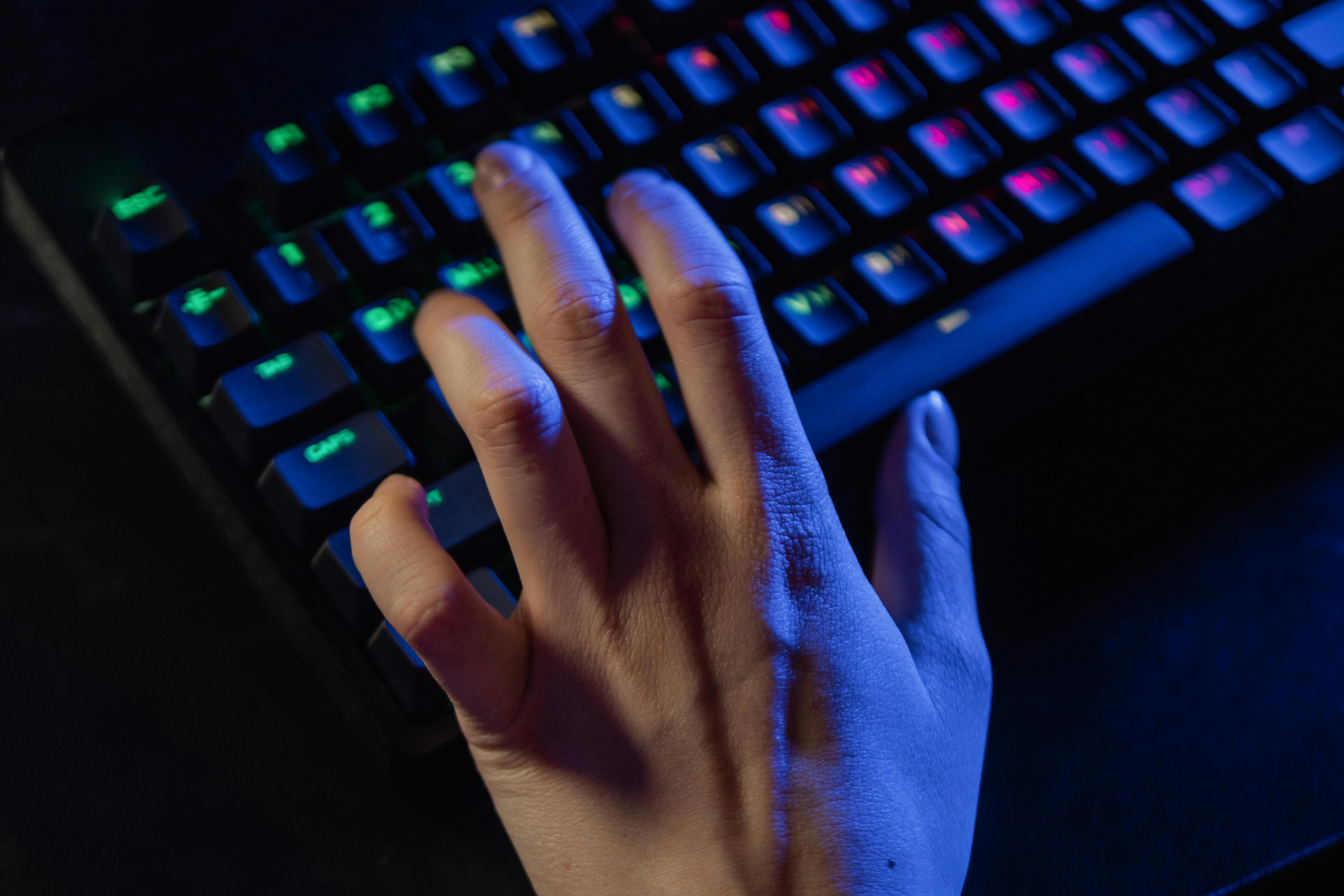
Is this it?
There's only like 3 Modifiers!
- and they're all the way at the edge of the kb, suggesting they are to be used infrequently
When you press a letter on a keyboard, the character doesn't NEED to appear on the screen, right? Surely, we didn't luck out with the TYPEWRITER and call it a day on progress?
I find this all weird because...
LETTERS DON'T EXIST
(I'm sorry you had to find out like this)
In natural language: Letters don't exist.
I know, it's hard to hear, and I'm sorry you had to learn it from me.
Language starts in speech, in sound, and so do our externalised ideas and thoughts. Editing by letters is extremely unnatural, but we've inherited this character-based editing method as a legacy of the printing press and typewriters, which is extremely ill-suited to our nature.
WHY ISN'T THERE A
DEDICATED EDITING MODE
ON OUR KEYBOARDS?
This all begs the question: "If Most Writing is Rewriting, why Isn't there a dedicated Editing Mode on our keyboards?"
Well, it turns out, there actually is.

patreon.com/noboilerplate
- Early videos
- Private discord channel access
- 1:1 Mentoring
I had to cut for time a more personal section about how I relate playing music to vim editing, as well as a bit of history about the program that started it all. This full video available to everyone who supports me on my patreon.
It's just me running this channel, and I'm so grateful to everyone for supporting me on this wild adventure.
If you'd like to see and give feedback on my videos up to a week early, as well as get private discord access, and even your name in the credits, it would be very kind of you to check my Patreon.
I'm also offering a limited number of mentoring slots. If you'd like 1:1 tuition on personal organisation, Rust, creative production, web tech, or anything that I talk about in my videos, do sign up and let's chat!
PART 3
EDITING == THINKING
William Zinsser, Writing To Learn
I hope I have shown that if writing is thinking, and writing is mostly editing, then perhaps it's actually EDITING that is mostly thinking.
I propose that using software and hardware that is optimised for writing not editing is SLOWING DOWN OUR THINKING.
So, we must speed it up, but how?
ESC TO A BETTER WORLD:
COMMAND MODE
Luckily, there is a solution for this from the computer science world,
a secret editing mode you can use to step back into a higher level of consciousness, just by pressing the escape key.
This editing mode is called Command Mode, and it's available in nearly every program in some form, or there is a plugin enabling it
The feature or plugins to look for will all be called something like "Vim Mode" or "Vim Motions".
Google it! You'll find them for all your programs and apps.
It's like the whole world is in insert mode, the regular typing mode all other apps are stuck with, but we can escape to this better world, hidden in plain sight.
WHAT IF WE USED
100% OF OUR
BRAIN KEYBOARD
Vim motions were originally popularised in the text editor of the same name, but it has escaped that nerdy walled garden to every other program and webapp in the world.
This mode that was designed to overcome the technical limitations of early computer terminals, has features that on the surface are unintuitive, but if you let your fingers guide you, you will find they are extremely natural.
WHY HJKL ?
←↓↑→
Let us consider the most basic example: why are the arrow keys in vim hjkl.
Technically, it's because they were designed for a time where not all keyboards had arrow keys, BUT THAT'S NOT THE COOLEST REASON! They could have been anything, but HJKL were chosen, and here's why:
Vim motions are designed around the human body in a fundamental way.
What seems on first glance like a random assortment of only partially mnumonic keys comes into clear focus when you consider not just what the letter of the key is, but where it is in relation to the hands above it.
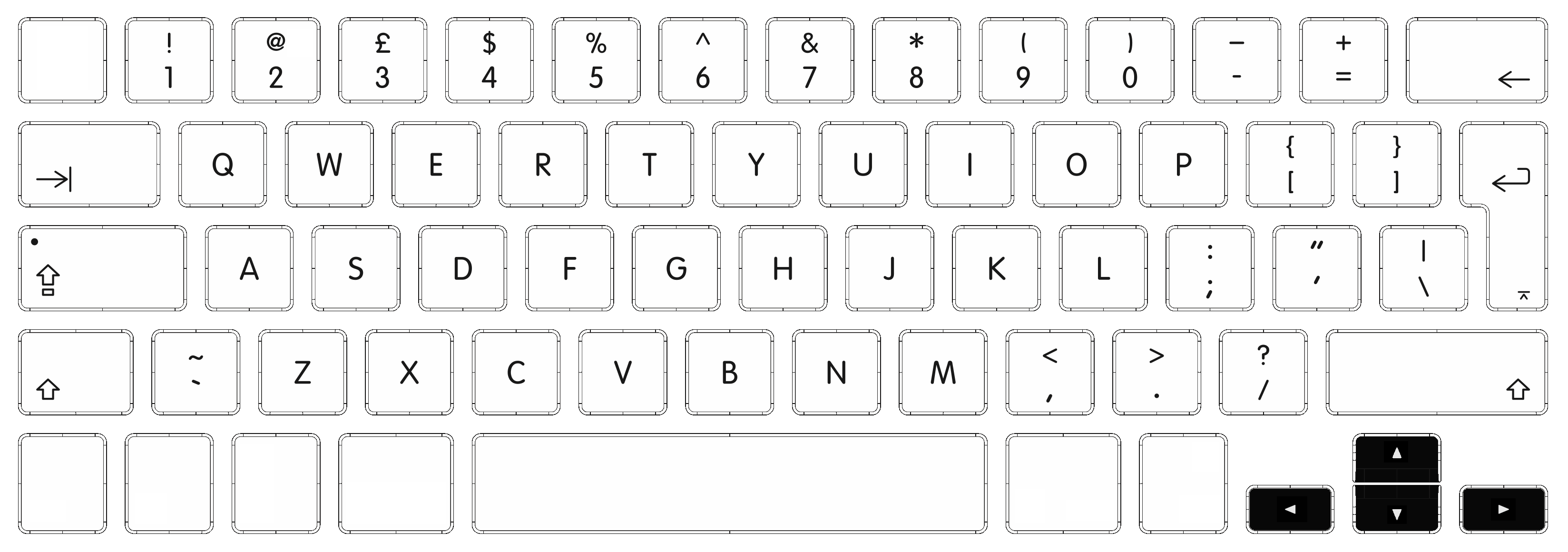
When you open a text file, the very first thing you'll want to do is read it, scrolling down the page as you do so.
The down arrow is the very first operation you need to do.
Where is it on a normal keyboard? SO FAR AWAY FROM THE HOME ROW.
Vim is designed for touch typists, we're navigating by touching the keyboard, not with our eyes.
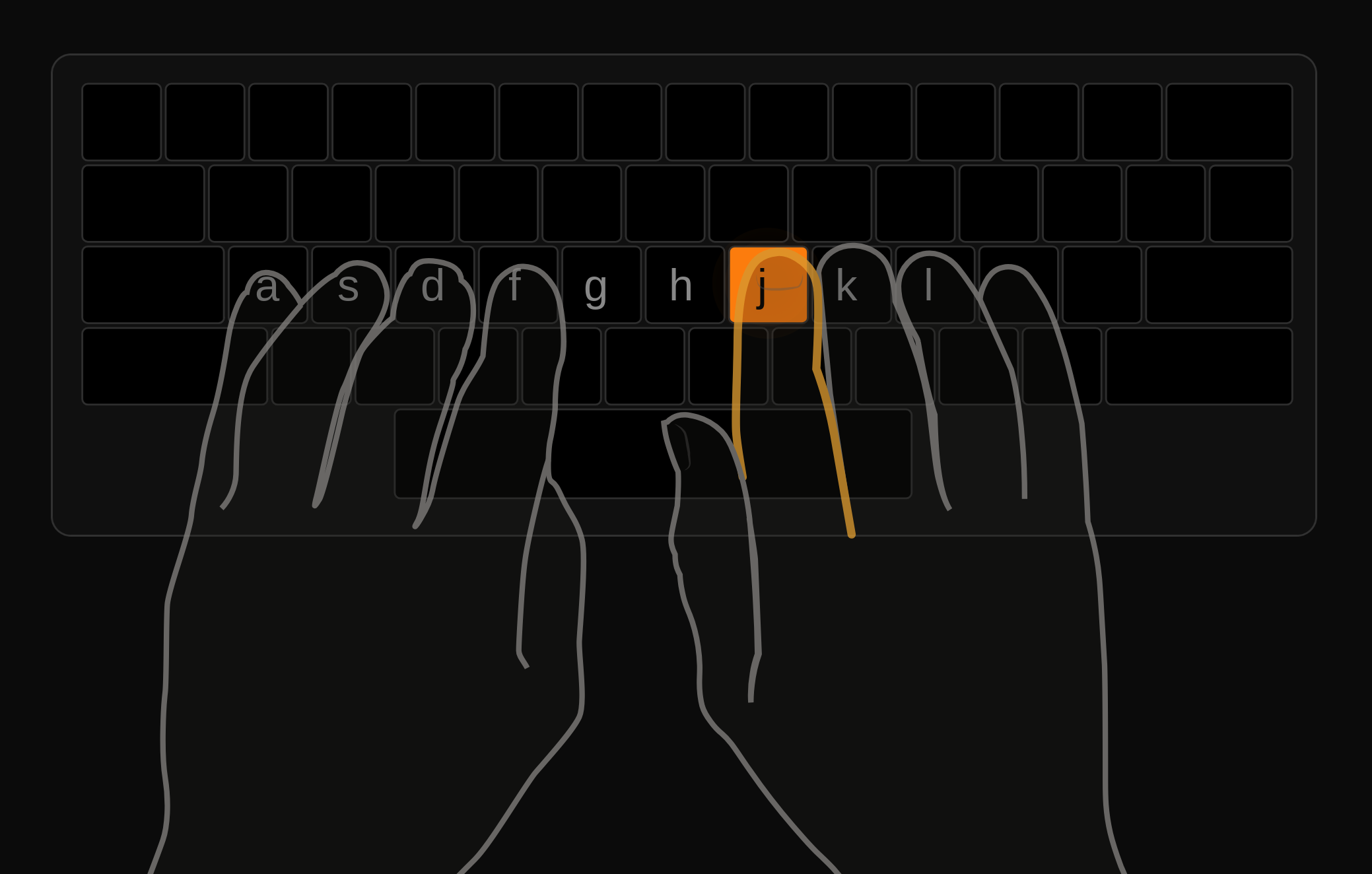
Image credit: edclub.com
And what QWERTY key is under the strongest finger of the hand that is dominant for most of the world?
J: the key that is the down arrow in vim.
This is a sort of 'orthopaedic-optimised' human/computer interface, one where the machine is bent to fit the person, not the other way around.
So you've moved around the document, now let's edit at the speed of thought:
- Delete that word
- Wait, delete these three words
- Actually, lose that whole sentence
- Move these 3 paragraphs to the next section
dw-deletewordd3w-delete3wordsdf.-delete till youfind a.characterd3}]]p-delete (cut)3}paragraphs,]]jump to next section,paste
These are just examples of what you can do with the d operator!
Vim motions are this mini editing language, replicating what you and I would SAY if we were editing a document together.
In this easy to learn language, you type an operator, like d for delete, then an optional number of repetitions, and then a motion, like w for word.
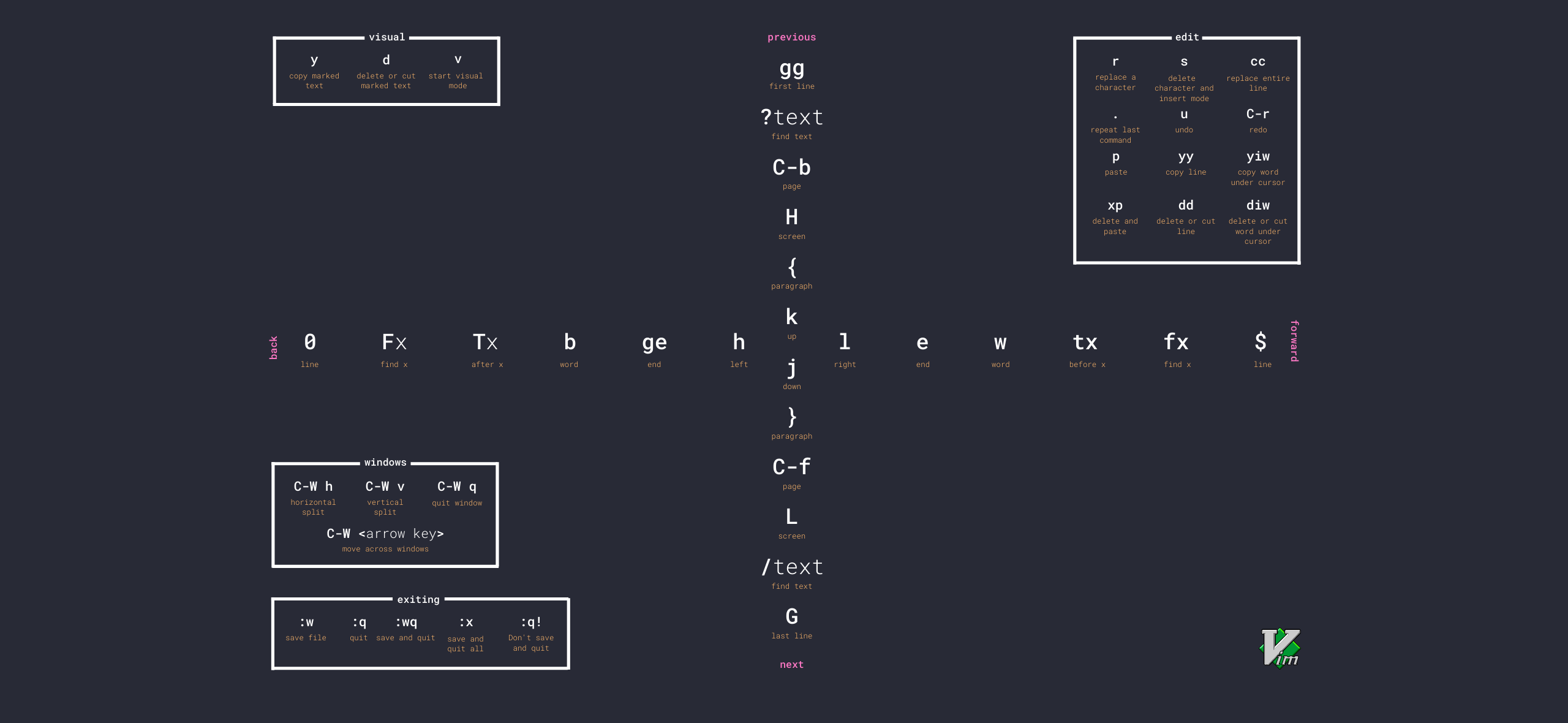
WAY more information here and in the description:
https://www.vim.page/vim-commands-cheat-sheet
There are so many operators and motions you can compose together in this powerful mini language, all using this same format:
- Operator
- Count
- Motion
You can learn as many or as few operators and motions as you like, and compose them in ways that make most sense in your workflow.
With vim mode enabled in your word processor, text editor or web browser, these simple edits and far, far more, can all be made without taking your hands off the keyboard.
It's like...
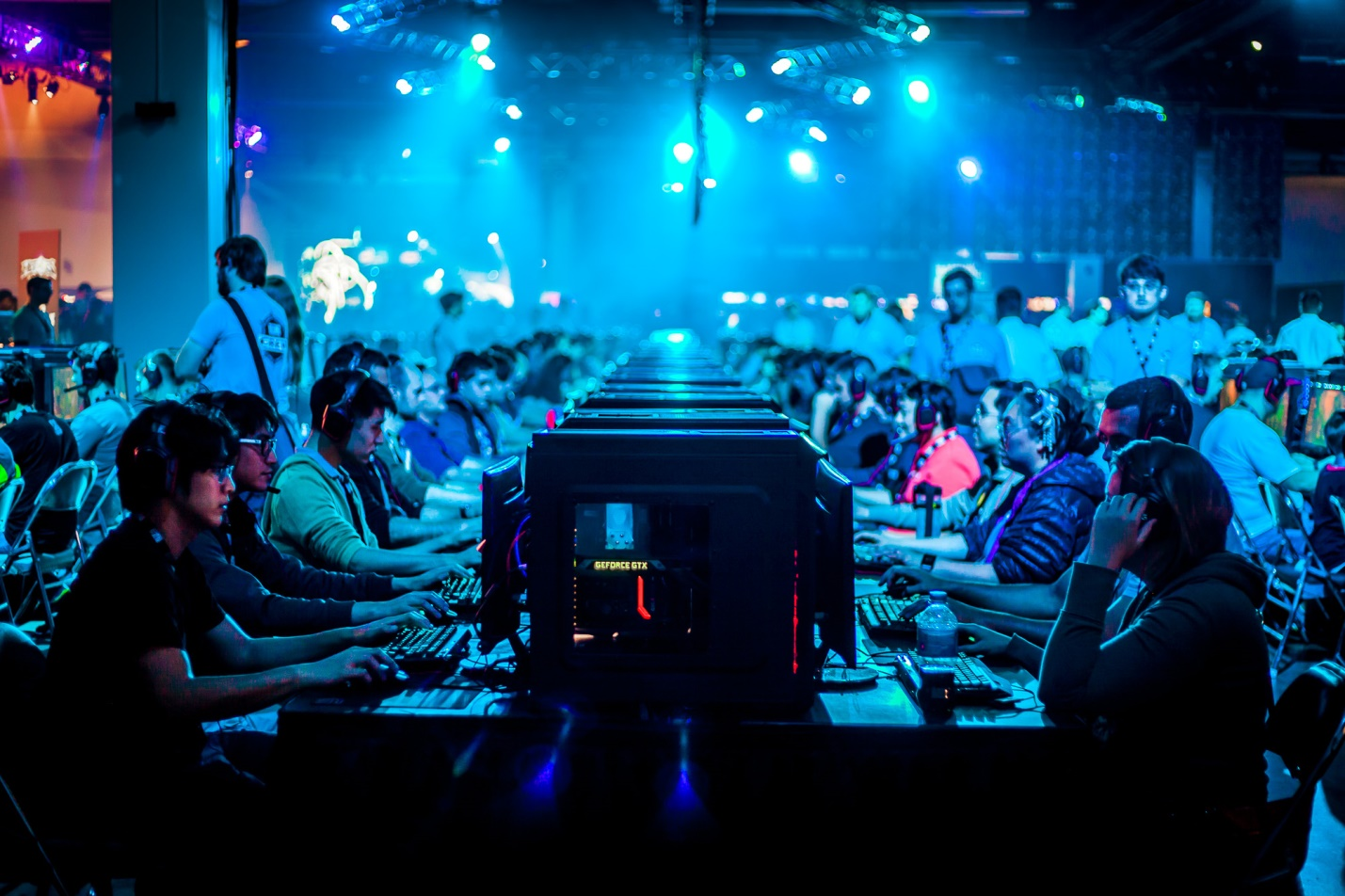
Have you ever seen a professional RTS player at a tournament?
They're not playing starcraft like you or I do, if you look closely, they're hardly using their mouse at all. And when they do, they never click any buttons on-screen.
All interactions with the UI, like building new units or researching the tech tree, or even switching the camera to focus on different areas of the battlefield, are done with the keyboard.
In the esports world, this is called micro, short for micromanagement.
They do this because at the professional level, the main differentiator between these elite gamers is not the strategies they use, anyone can look those up, but how fast they can execute them.
Using vim motions is to editing with your mouse, as rts micro is to playing the game only by clicking.
What I'm trying to say here is that if you feel like you're constantly getting zurg rushed by life, it might be time to try learning vim motions.
YOU CAN'T EDIT
WITH ONE HAND
(TIED BEHIND YOUR BACK)
CLICKING A MOUSE
Like you, I don't just use my computer to type text, I write music, edit video, browse the web, and do a thousand other tasks.
If this editing superpower didn't follow me across my whole digital life, it wouldn't work for me, for one very important reason.
POPULARITY MATTERS

(noboilerplate.org)
POPULARITY MATTERS.
Right, I'm banging the 'popularity' drum again. Have you bought the t-shirt yet? noboilerplate.org
It's the same reason I'm excited by Obsidian, the same reason I'm excited by Rust, the same reason the STEAM DECK solved gaming on linux - POPULARITY MATTERS.
If you're bouncing between 10 applications with different hotkey systems, you'll never develop the muscle memory to become a virtuoso.

Vim hotkeys are everywhere!
Vim hotkeys are EVERYWHERE so you can use the same advanced system inside
- your browser,
- gmail, yahoo, hotmail - even hey.com, email for autists,
- microsoft word and google docs, with a vim plugin.
- trello & jira
- vscode, intellij; every IDE, the editor wars are over, emacs has vim motions built in,
- even MY VIDEO EDITOR, reaper, has a vim plugin, I'm using it right now
If Obsidian didn't have a vim mode I wouldn't even have CONSIDERED it as a serious place to host my second brain, and as a result, I may never have made this channel. (that doesn't bear thinking about...)
This fluent hotkey interface doesn't just help me get my work done twice as fast, I wouldn't be here raving about it, if it were simply a productivity hack.
The Bechdel Test
A movie passes the Bechdel Test if:
- It has
at leasttwo women in it - Who
talkto each other - About something besides a
man
(Passing the test should not be difficult...)
It's like the Bechdel test:
A movie that passes the test need not be a feminist masterpiece, this represents the BARE MINIMUM.
The bar is so low it's practically a tripping hazard in hell, but here you are, (as they say) limbo dancing with the Devil.
GOOD DESIGN MATTERS
Image credit: colomio.com
It's the same with vim bindings: An application that has them need not be a good app, it represents the BARE MINIMUM for me to take it seriously.
Over the years, I've come to realise: Vim bindings are a mark of good design.
If professionals use your software, there will eventually be a vim mode for it, either first-party due to the volume of user requests, or the community will MAKE one happen with a plugin or extension.
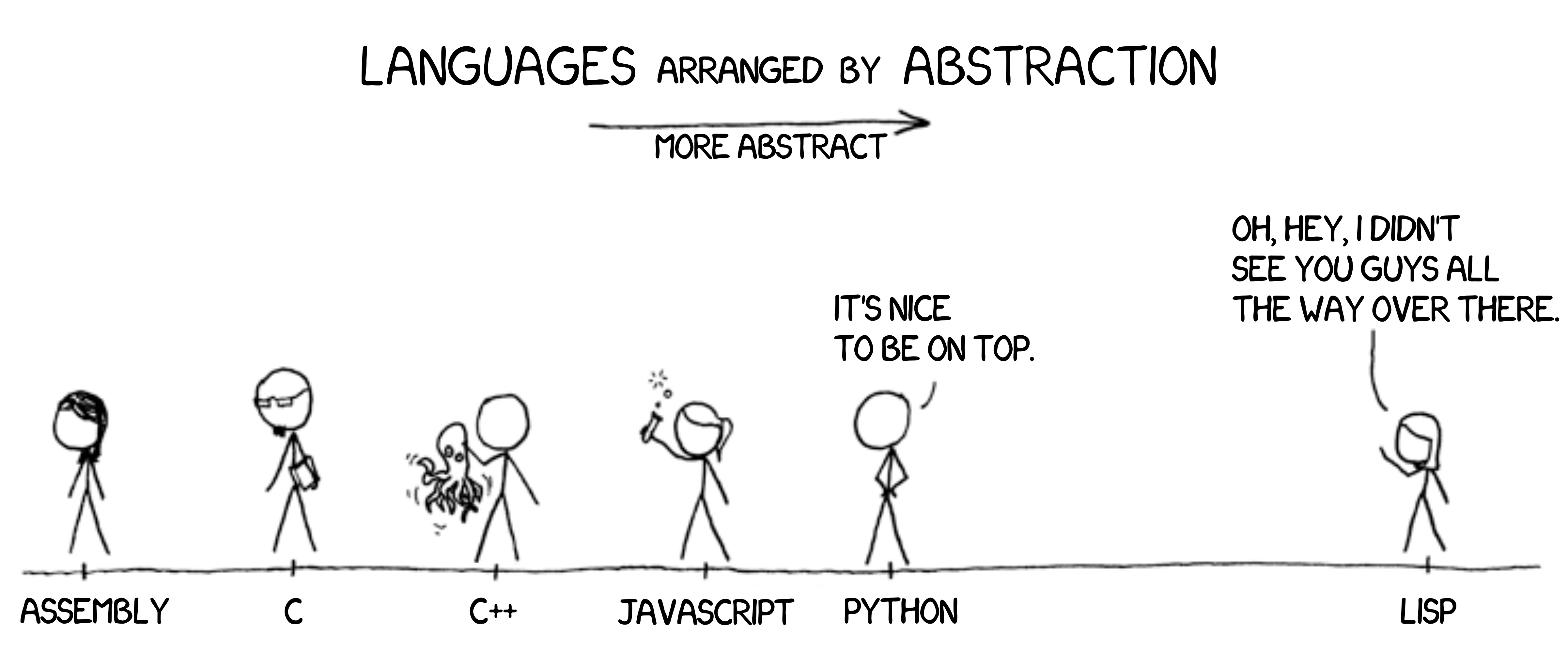
Image Credit: My terrible edit of https://xkcd.com/435/
Without wishing to get too deep, it's difficult to miss something that you've never experienced.
This is often illustrated by Plato's Allegory of The Cave, but I am not a philosopher, I am but a humble DJ/webmaster.
In programming, we talk about The Blub Paradox, where people who have learned a lower-level language can't imagine why they would need the features of a higher-level one.
- "Iterators?" says the c programmer "What's wrong with a for loop?"
- "Functions?" says the basic programmer, "GOTOs have worked fine for me for years!"
- "GOTOs?" says the assembly programmer, "just stick some bytes in memory and jump there"
And of course, as we all know, 'real programmers' use butterflies!
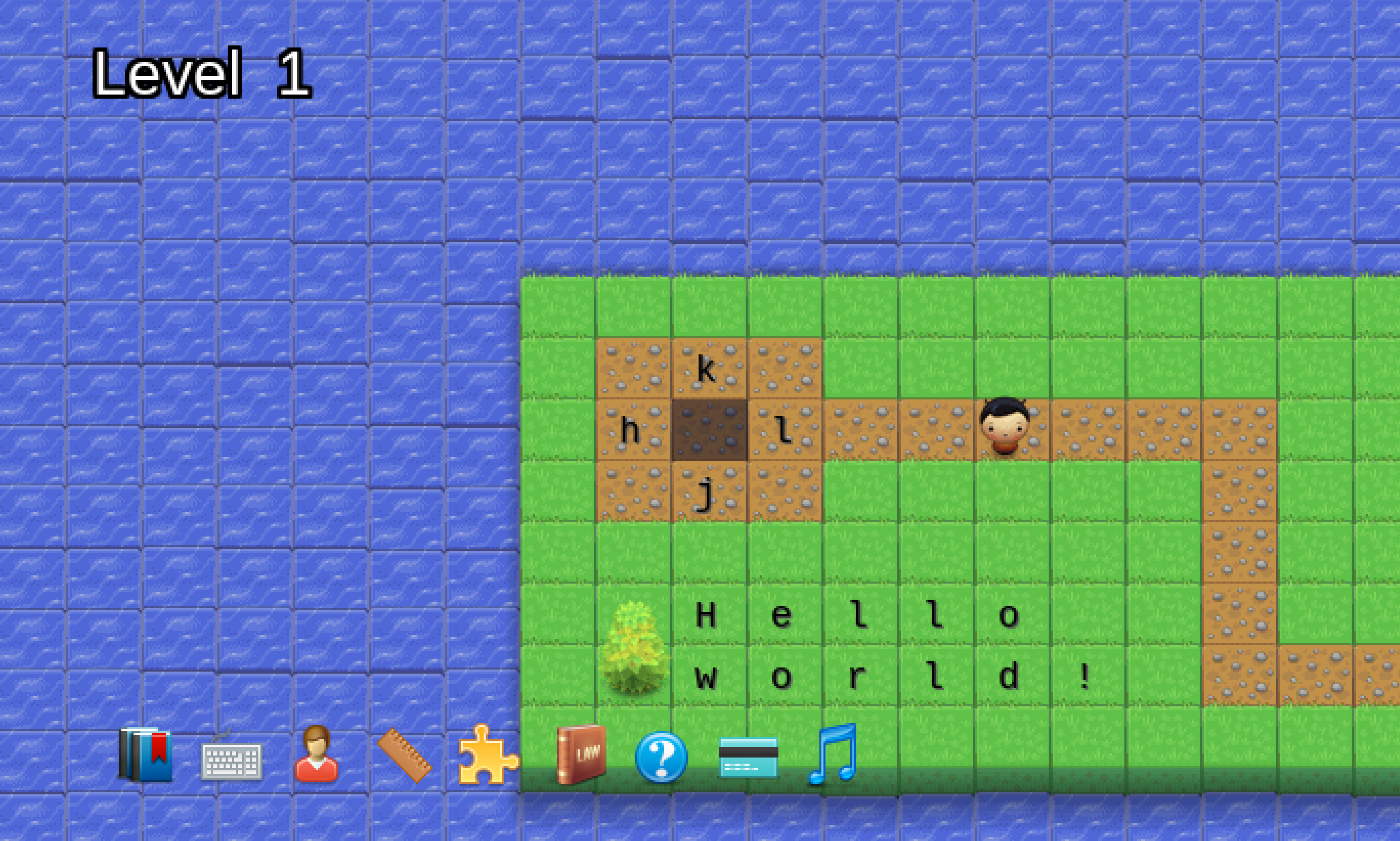
https://vim-adventures.com (others available)
I would like you to trust me, and try learning vim motions for yourself, it'll take you 5 minutes to replicate the 7 hotkeys you already know, and after then, there is no upper limit on how powerful you may become!
I've included lots of links to games and tips for learning vim motions in the pinned comment of this video, and will add more as they are suggested to me.
SPEED UP YOUR EDITING
SPEED UP YOUR THINKING
And remember why we're doing all this: Speed up your editing, speed up your thinking.
Thank You
To all my patrons, you make this possible!
let producers: [&str; 0] = [];
let sponsors = [
	"Jaycee", "Ything LLC", "PotatoScream"
];
let patrons: [&str; 879];
I'd be very greatful for your support on:
If you would like to support my channel, get early ad-free and tracking-free videos, your name in the credits or 1:1 mentoring, head to my patreon or ko-fi.
If you're interested in transhumanism and hopepunk, please check out my weekly sci-fi audiofiction podcast, Lost Terminal.
Season 3 of the Phosphene Catalogue is coming soon, if you like mysteries and art, check it out!
Transcripts and compile-checked markdown sourcecode are available on namtao.org and github, links in the description, and corrections are in the pinned ERRATA comment.
Thank you so much for watching, talk to you on Discord.